I design and deploy web applications, from the code to the infrastructure that hosts them. What drives me: understanding a system end to end, piece by piece.
This site is a showcase: my portfolio details my background.
Scroll
0Initialisation
Everything I build is deployed on my own rack.
I used to write down every command so as not to forget it. Today, I write my whole infrastructure as text: I know what I am running, I get the same result every time I run it again, and I no longer do anything by hand.
With Terraform, I write the virtual machines I need in a text file, and I can recreate them exactly the same at any time.
2Ansible
I configure them
With Ansible, I write scripts that install and set up everything that lives inside those machines. I can run them again without breaking anything: the desired state is reached or kept.
3GitOps
I push, the rack follows
With the GitOps approach, my applications are described in git: the cluster compares its state with the repository and aligns itself to it on its own. To deploy, all I have to do is commit a change.
Now, here are the projects I deploy on it.
1
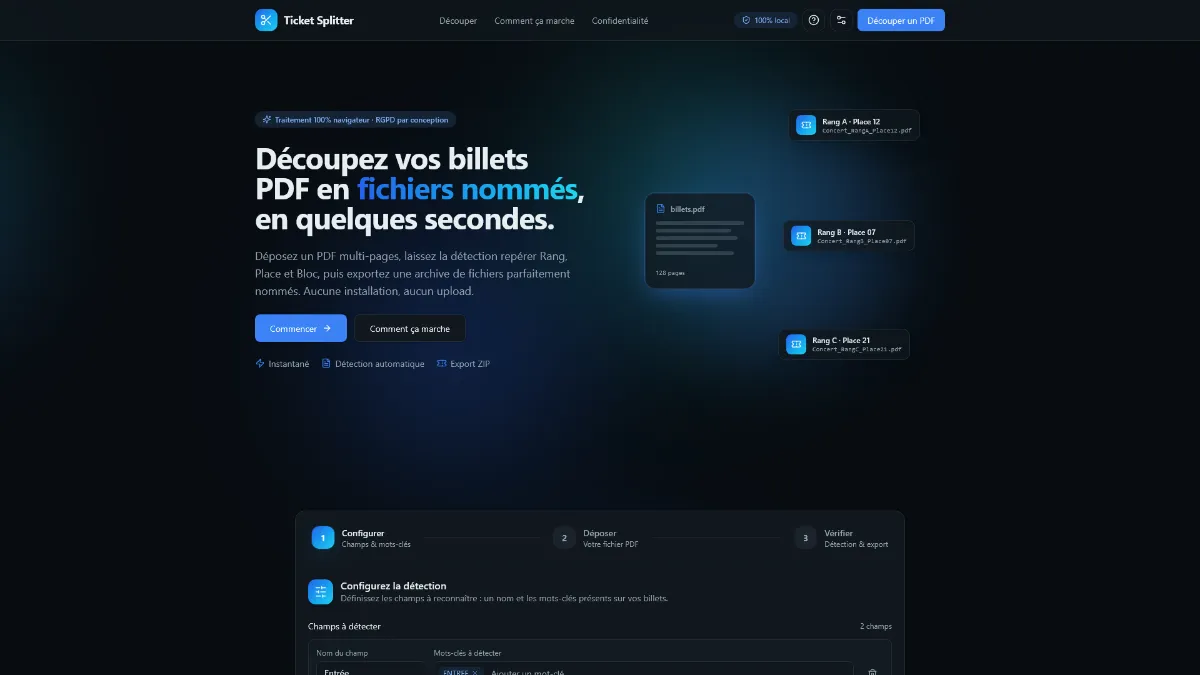
Ticket Splitter
I built it for a very real need: PDF tickets to split and rename by hand, over and over again.
1.1Ticket Splitter · Network card
No file uploaded
These tickets carry company data: nothing was allowed to leave the computer. So I kept everything in the browser, from reading to archiving. The Network tab lets you check it.
1.2Ticket Splitter · Processor
Rust compiled to WebAssembly
Without a server, processing had to stay fast right on the computer. So I wrote the core that finds the fields and splits the PDFs in Rust, compiled to WebAssembly.
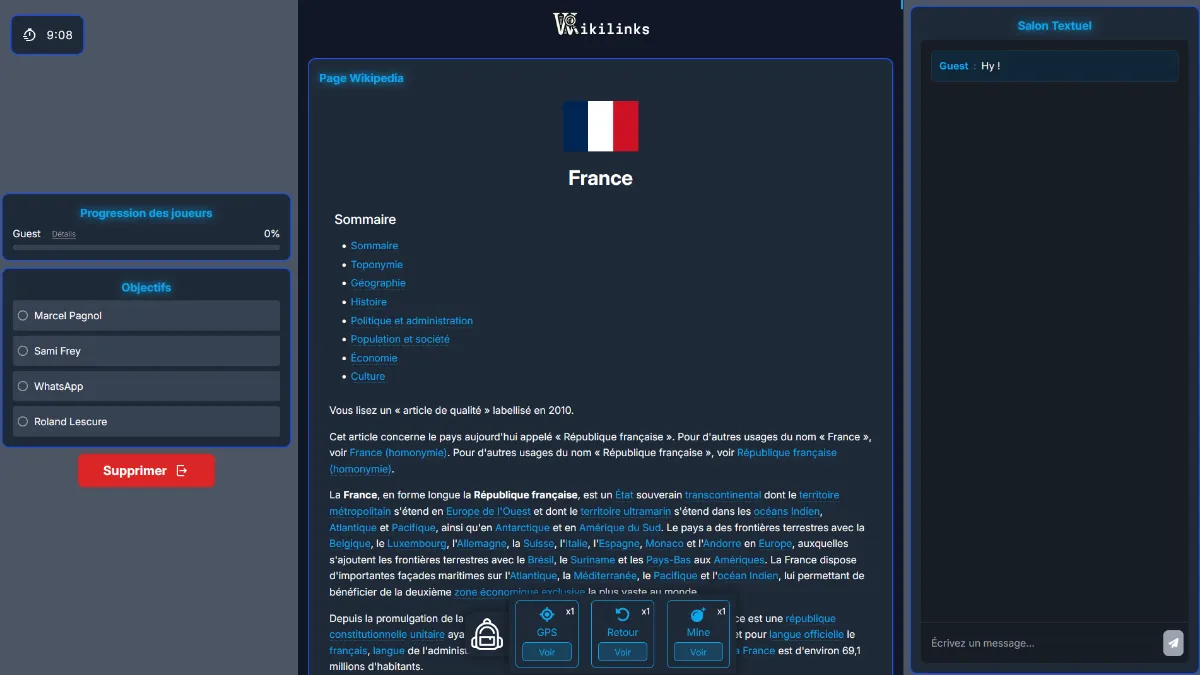
We built a real-time multiplayer game: reach one Wikipedia article from another, following internal links only.
2.1WikiLinks · Network card
Node.js · WebSocket · Redis
Games are played in real time over the WebSocket protocol: gameplay, chat and opponents' actions. To run the server as several copies, we put Redis at the centre: it serves as the shared source of truth and routes each action to the right instance.
2.2WikiLinks · Processor
BFS solver in C
We wrote a shortest-path solver in C that walks the graph of Wikipedia links. The size of the graph called for memory-efficient loading and traversal.
React · TypeScript · Node.js · WebSocket · Redis · MongoDB · C · Android · Docker · GitLab CI
3
ATS
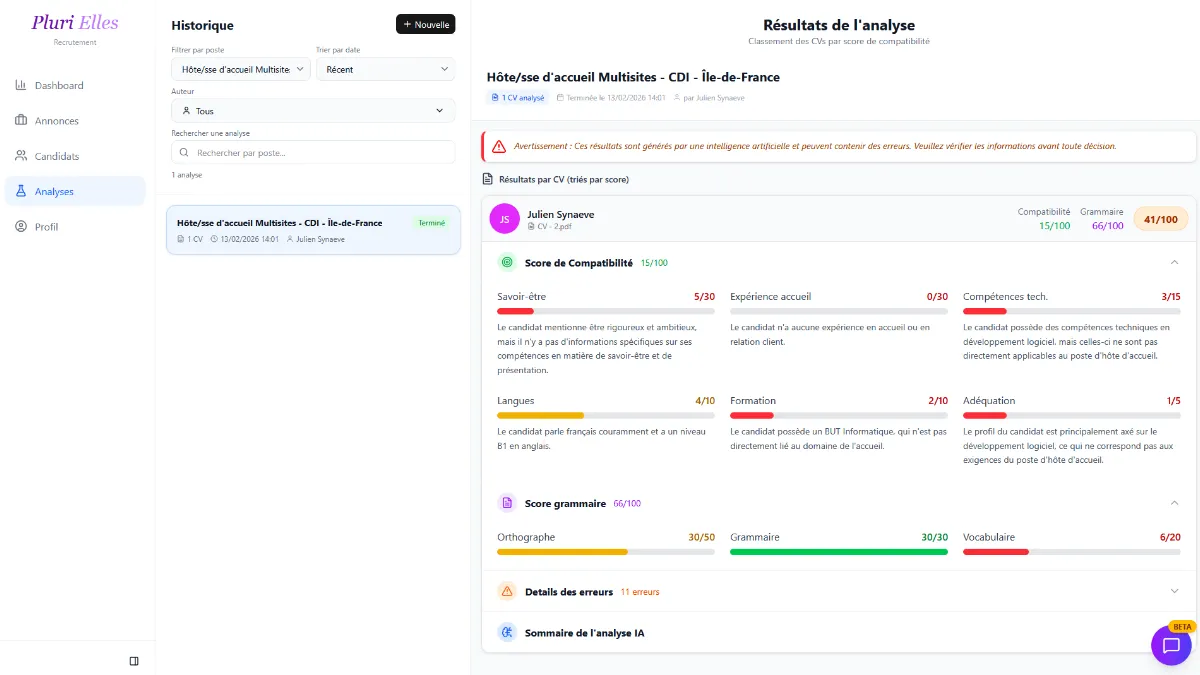
We delivered an applicant tracking system to a client company.
3.1ATS · Drive bays
Multi-engine OCR
To analyse a CV, its text must first be extracted. We compared six OCR engines and kept two: Tesseract and Mistral OCR.
3.2ATS · Coprocessor
Mistral AI
Once the text is extracted, we analyse and score the CVs in batches with the Mistral AI API. A grammar check completes the evaluation of each application.